



Sagie Azoulay | Still Life Without a Head
January 08 - February 14, 2026
Solo Show: Sagie Azoulay
Curator: Nir Shauloff
Sometimes you see a fork and wish to die.
Since ancient times, painting has harnessed the object as a means for us to discuss our humanity. We place things upon the canvas to gaze through them at ourselves: nature is silent so that we may speak. The genre of still life is a long-standing tradition that found its distinct home in painting; it is composed of canvas and paint, brush and gaze. The painter's gaze is that of an individual inviting many eyes to a private moment. He demarcates the boundaries of life within the boundaries of the canvas and says: This is the world for now. Let us look at it.
“Still life is the world minus its narratives,” writes Norman Bryson. Still life refuses drama and expels the human presence from the canvas. The human is absent from the world, leaving behind only the gaze of time, the medium in which the human operates. Over the past two years, Sagie Azoulay has turned to a silent painterly tradition, a subject seldom addressed locally. He says: This is the world for now. Let us look at it.
Azoulay's still life exists in the gap between the tradition of the Low Countries' Stilleven and the Nature Morte of the Catholic South. After the object detached from the human and began to appear alone as the subject of the painting, the term "Quiet Life" immortalized the serene and vital existence of lavish meals, flowers, and gleaming silverware, while the term "Dead Nature" pointed to the bitter end of animal carcasses, time running out, and the death lurking for all. It seems that the Hebrew translation, Teva Domem (Silent Nature), avoids choosing between the two. It emphasizes the silence dwelling here, in our local present. Azoulay's works are made of this material.
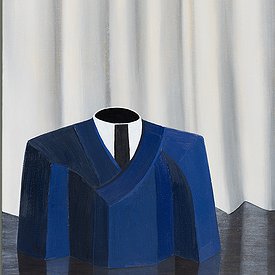
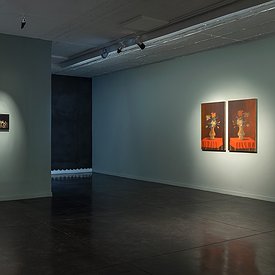
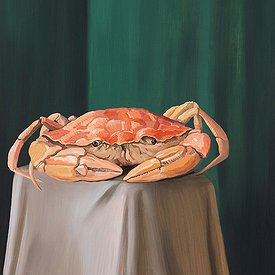
Contrary to tradition, the paintings in this exhibition were not created purely from observation, but from memory and imagination. The works do not document what Meyer Schapiro calls the "kinship of the painter and his objects," but rather present a distant gaze at what is not there: duplications, reflections, and reproductions of images. Here is an "apple," here is a "banana," here are "flowers." The objects are placed on a pedestal in a dim environment, out of context, without time or place. Behind them, a theater curtain marks the show. This is “the showing of the showing,״ according to Bertolt Brecht.
The works in Still Life Without a Head. are a representation of a representation. The image looks at itself, a mirror facing a mirror, in a circle devoid of origin, presenting a frozen dialogue. Thus, the works refuse the transfiguration inherent to the secret of the stillness of painting itself. They point instead to the absent, that which is not presented. But we are here. What are we looking at now? Here is the apple, here is the banana, here are flowers. The clamor of history and reality remains outside the canvas, and yet it is still present. The still life waives memento mori, for here and now, we do not need art to remind us of death.
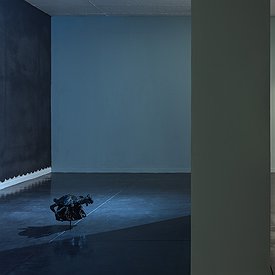
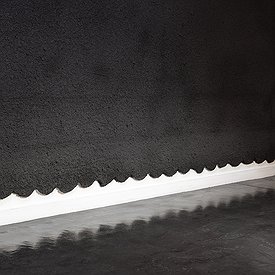
This is also the moment when we notice that alongside the paintings, another space exists, external, at the back of the gallery. There, the black becomes tangible matter, a heavy concrete screen covering the white wall, upon which paintings can no longer be displayed. From the floor emerges a head made of darkness, separate from the still life. The rest is silence.
Nir Shauloff, January 2026
Supported by The Rabinovich Foundation for the Arts, Tel Aviv
_____________________________________________________
טבע דומם בלי ראש
שגיא אזולאי
אוצר: ניר שאולוף
08.01.2026 - 14.02.2026
לפעמים אתה רואה מזלג ומבקש את נפשך למות.
עוד מימי קדם, הציור רותם אליו את החפץ כדי שנוכל לדבר בו על אנושיותנו. אנחנו מניחים את הדברים על הבד כדי להביט דרכם בעצמנו: הטבע שותק כדי שנוכל אנחנו לדבר. סוגת הטבע הדומם היא מסורת ארוכת שנים, שמצאה בציור את ביתה המובהק ועשויה בד וצבע, מכחול ומבט. המבט של הצייר הוא התבוננות של יחיד, שמזמין עיניים רבות לרגע פרטי. הוא תוחם את גבולות החיים בגבולות הקנבס ואומר: הנה, זה העולם, לעת עתה. עכשיו נסתכל על זה.
״טבע דומם הוא העולם פחות הנרטיבים שלו״, כתב נורמן ברייסון. הוא מסרב לדרמה, ומרחיק את הנוכחות האנושית מהבד. האדם מושעה בו מן העולם, ונותר ממנו רק מבטו של הזמן - המדיום בו נע האנושי. בשנתיים האחרונות שגיא אזולאי פונה למסורת ציורית הפועלת בדממה, שמעטים עוסקים בה במרחב המקומי. הוא אומר: זה העולם, לעת עתה. עכשיו נסתכל על זה.
הטבע הדומם של אזולאי מתרחש במרווח שפעור בין מסורת ה-Still Life של ארצות השפלה לבין ה-Nature Morte של מדינות הדרום הקתולי. לאחר שהחפץ נפרד מן האדם והחל להופיע לבדו כנושא הציור, המונח ״חיים שקטים״ הנציח את הקיום השליו והחיוני של ארוחות דשנות, פרחים וכלי כסף בוהקים, בעוד המונח ״טבע מת״ הצביע על בשר החיה שניצודה, הזמן האוזל והמוות האורב לכל. דומה שהתרגום לעברית - טבע דומם - נמנע מלבחור בין השניים. הוא מדגיש את הדממה השוהה כאן, בהווה המקומי. עבודותיו של אזולאי עשויות מן החומר הזה.
בניגוד למסורת, הציורים בתערוכה לא נוצרו רק מתוך התבוננות, אלא מן הזיכרון, ומן הדמיון. העבודות לא מתעדות כנהוג את מה שהחוקר מאייר שפירו מכנה ״הקרבה שבין הצייר לעצמיו״, אלא מציגות התבוננות מרוחקת במה שאיננו: הכפלות, השתקפויות והעתקים של דימויים. הנה ״תפוח״, הנה ״בננה״, הנה ״פרחים״. הדברים מונחים על פדסטל בסביבה עמומה, מחוץ להקשר, ללא זמן וללא מקום, ומאחוריהם וילון תיאטרון המעיד על ההצגה. במילותיו של ברטולט ברכט, זוהי הראיית ההראייה.
העבודות ב״טבע דומם בלי ראש״ הן ייצוג של ייצוג. הדימוי מביט בעצמו, מראה מול מראה, במעגל נטול מקור המציע דיאלוג קפוא. כך הן מסרבות לטרנספיגורציה שטמונה בסוד הטבע הדומם של הציור, ומצביעות על ההיעדר, על מה שאיננו מיוצג. אבל אנחנו כאן. על מה נסתכל עכשיו? הנה הפרחים, הנה התפוח, הנה הבננה. המולת ההיסטוריה והמציאות נותרת מחוץ לקנבס, אך עודנה נוכחת, והטבע הדומם מוותר על ממנטו מורי שכן כרגע, כאן, אין לנו צורך באמנות כדי להיזכר במוות.
זה גם הרגע שבו ניתן להבחין כי לצד הציורים מתקיים מרחב נוסף, חיצוני, באחורי הגלריה. שם השחור הופך לחומר ממשי, מסך בטון כבד המכסה על הקיר הלבן, עליו כבר לא ניתן להציג ציורים. מן הרצפה מבצבץ ראש עשוי חושך, נפרד מן הטבע הדומם. והיתר - שתיקה.
ניר שאולוף, ינואר 2026
בתמיכת קרן יהושע רבינוביץ לאמנויות, תל אביב (ע"ר)
Read More
Links
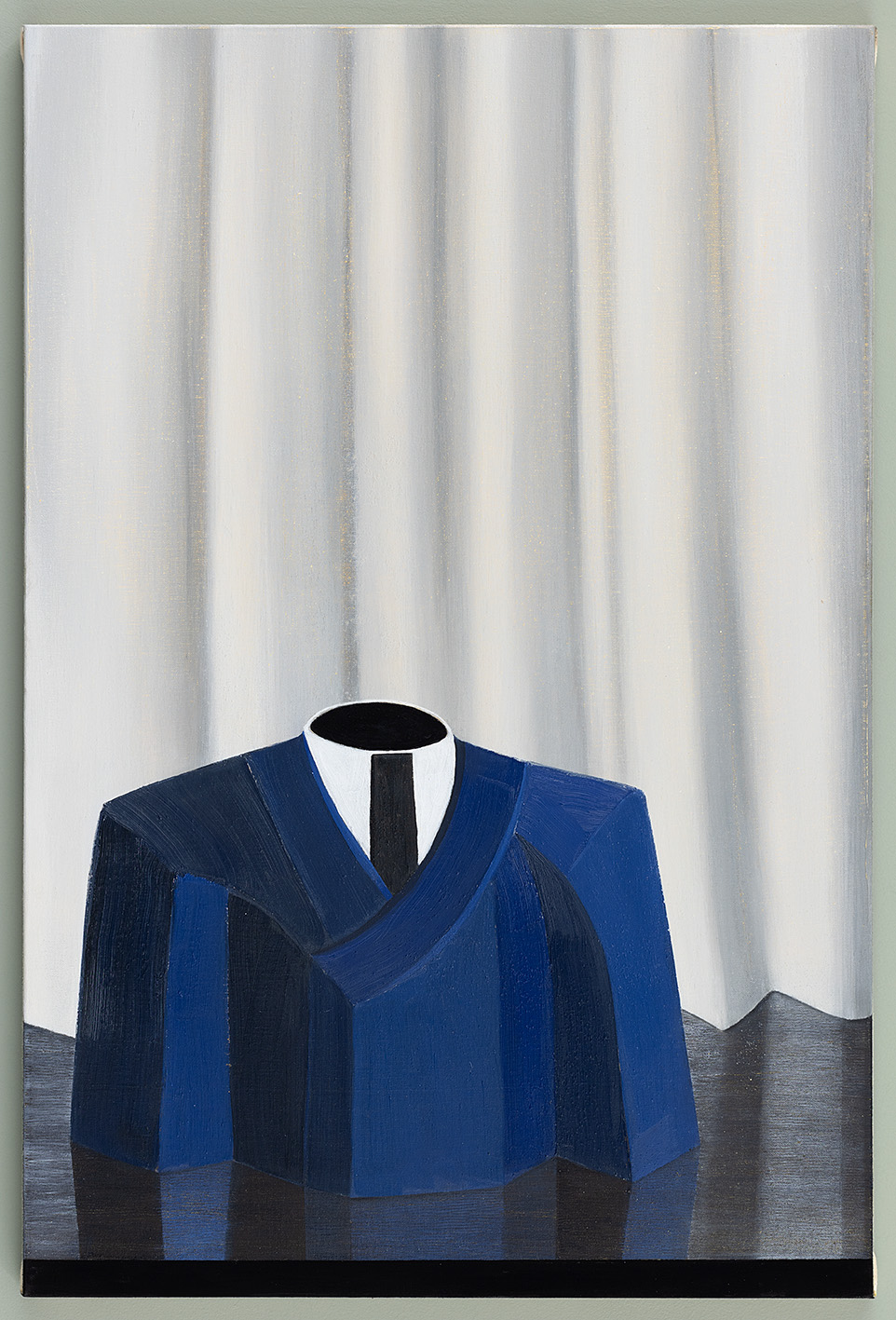
Sagie Azoulay, Still Life Without a Head, 2025, Oil and acrylic on canvas, 90x60 cm, Photo Credit: Elad Sarig
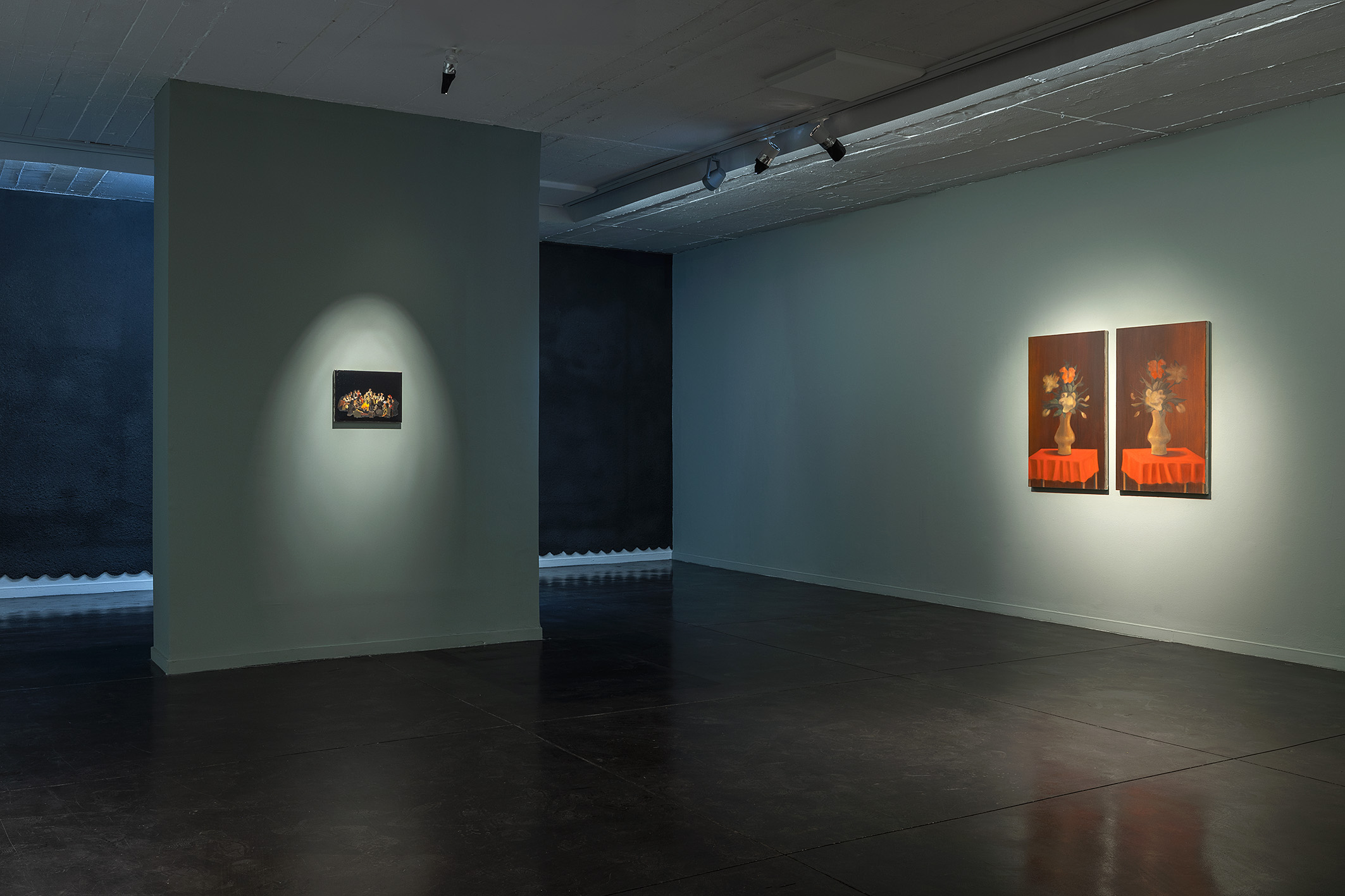
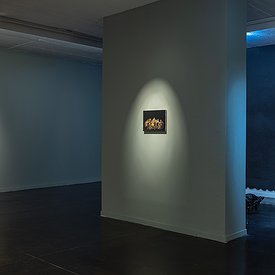
Sagie Azoulay, Still Life Without a Head, 2026, Installation View at RawArt Gallery, Photo Credit: Elad Sarig
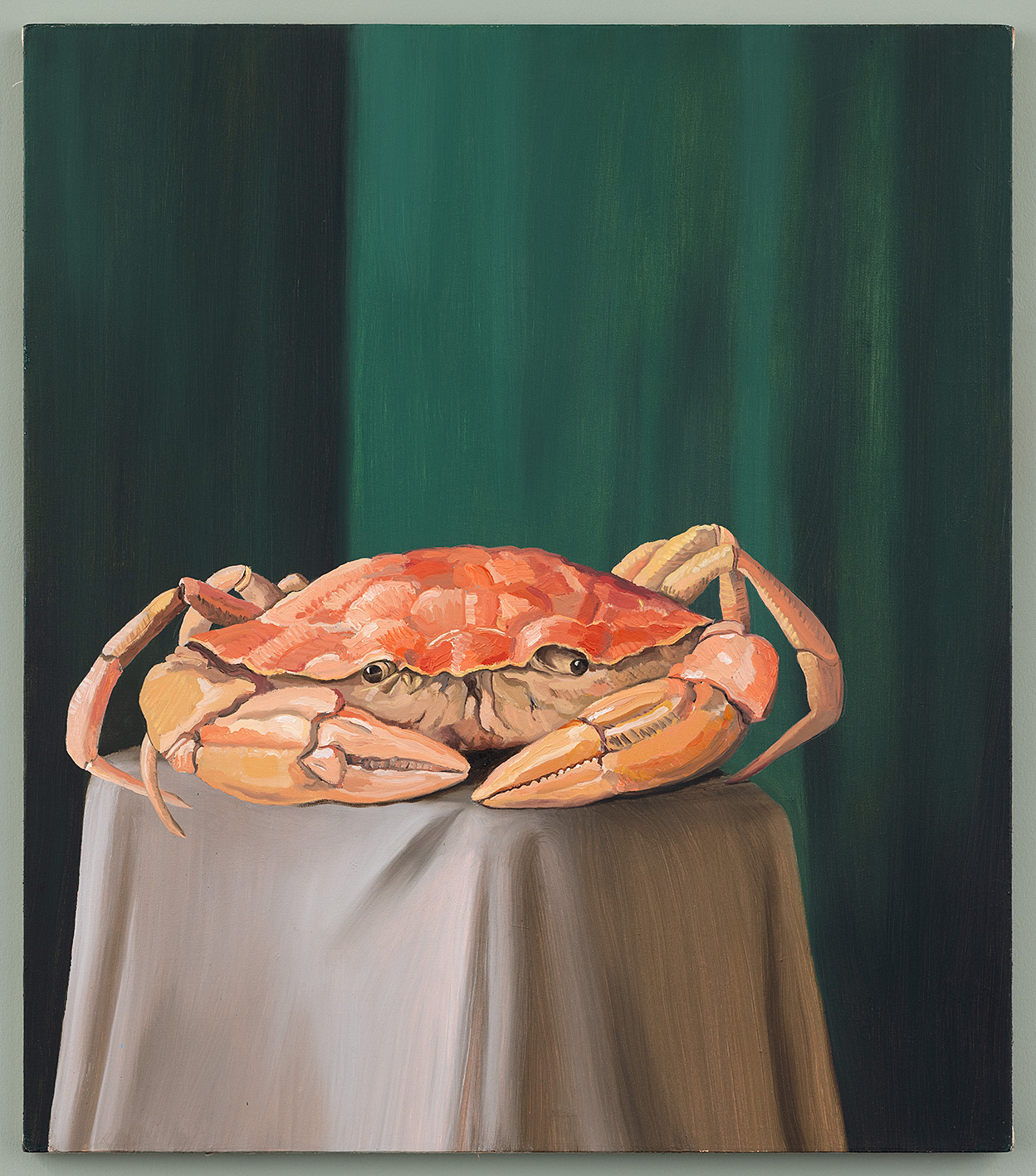
Sagie Azoulay, Still Life With Crab, 2024, Oil on canvas, 80x70 cm, Photo Credit: Elad Sarig
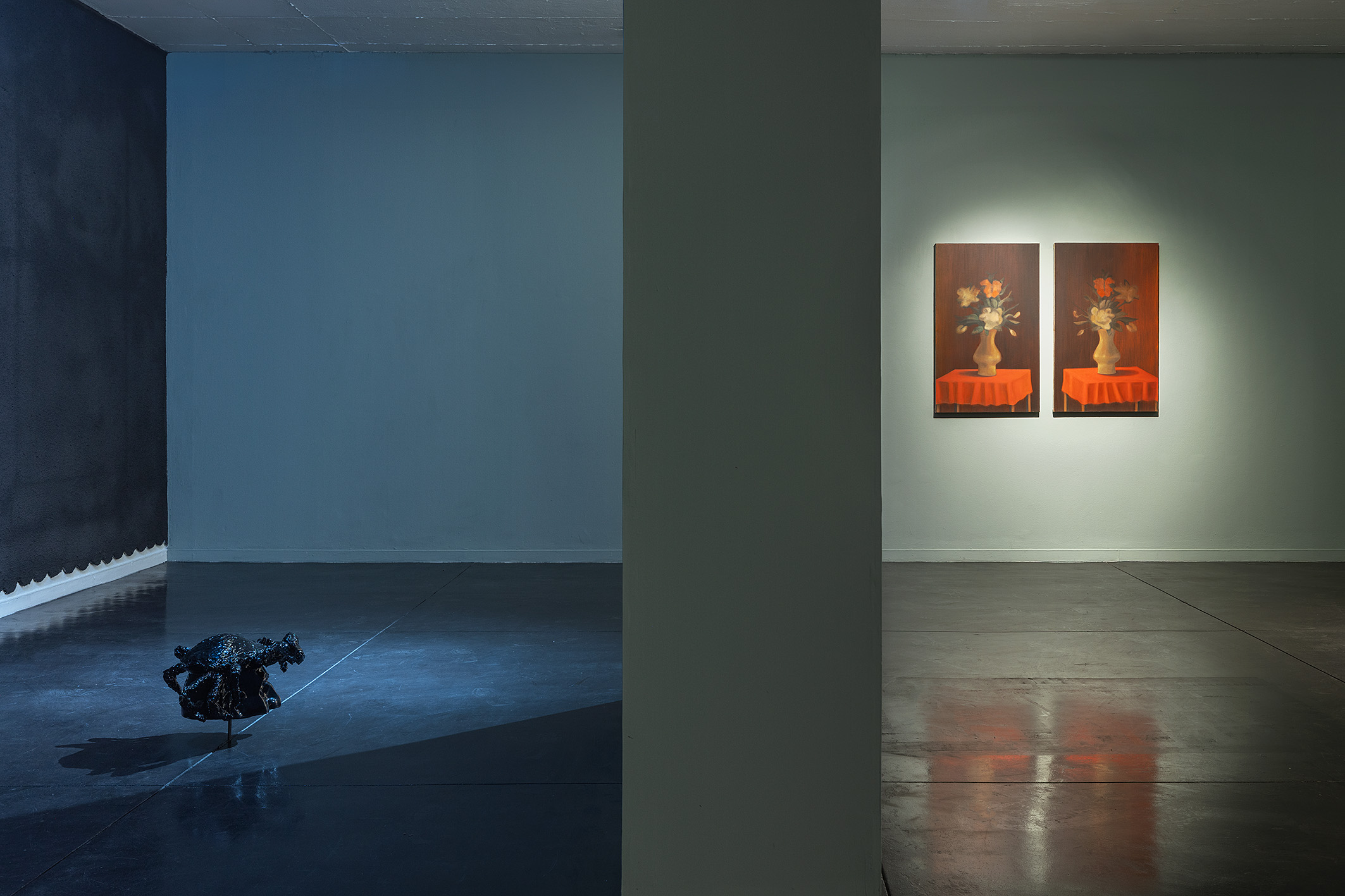
Sagie Azoulay, Still Life Without a Head, 2026, Installation View at RawArt Gallery, Photo Credit: Elad Sarig
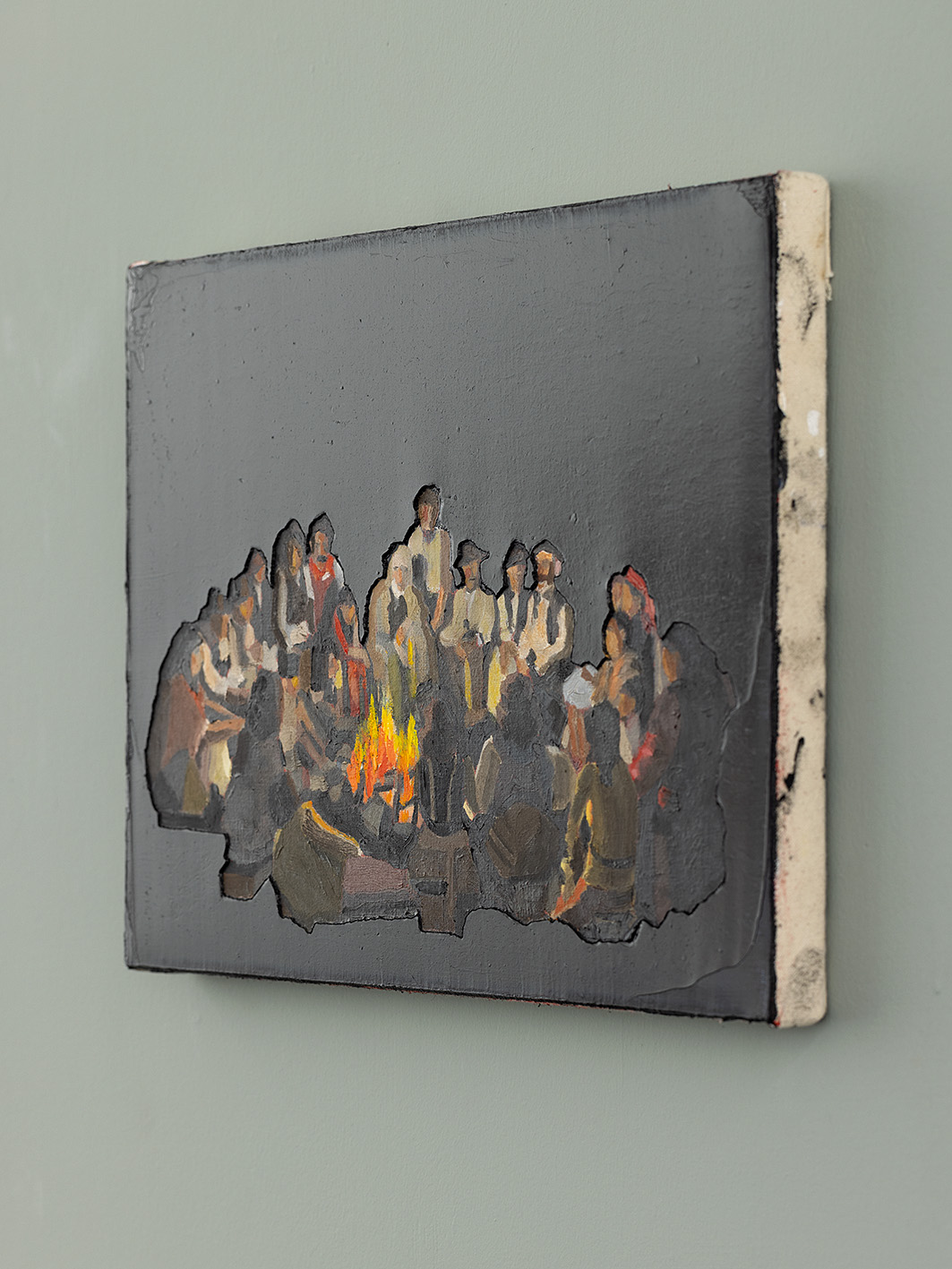
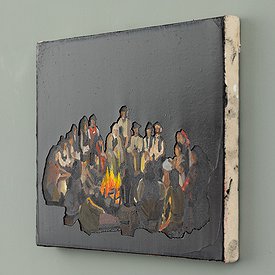
Sagie Azoulay, Bonfire, 2025, Oil on canvas, 40x30 cm, Photo Credit: Elad Sarig
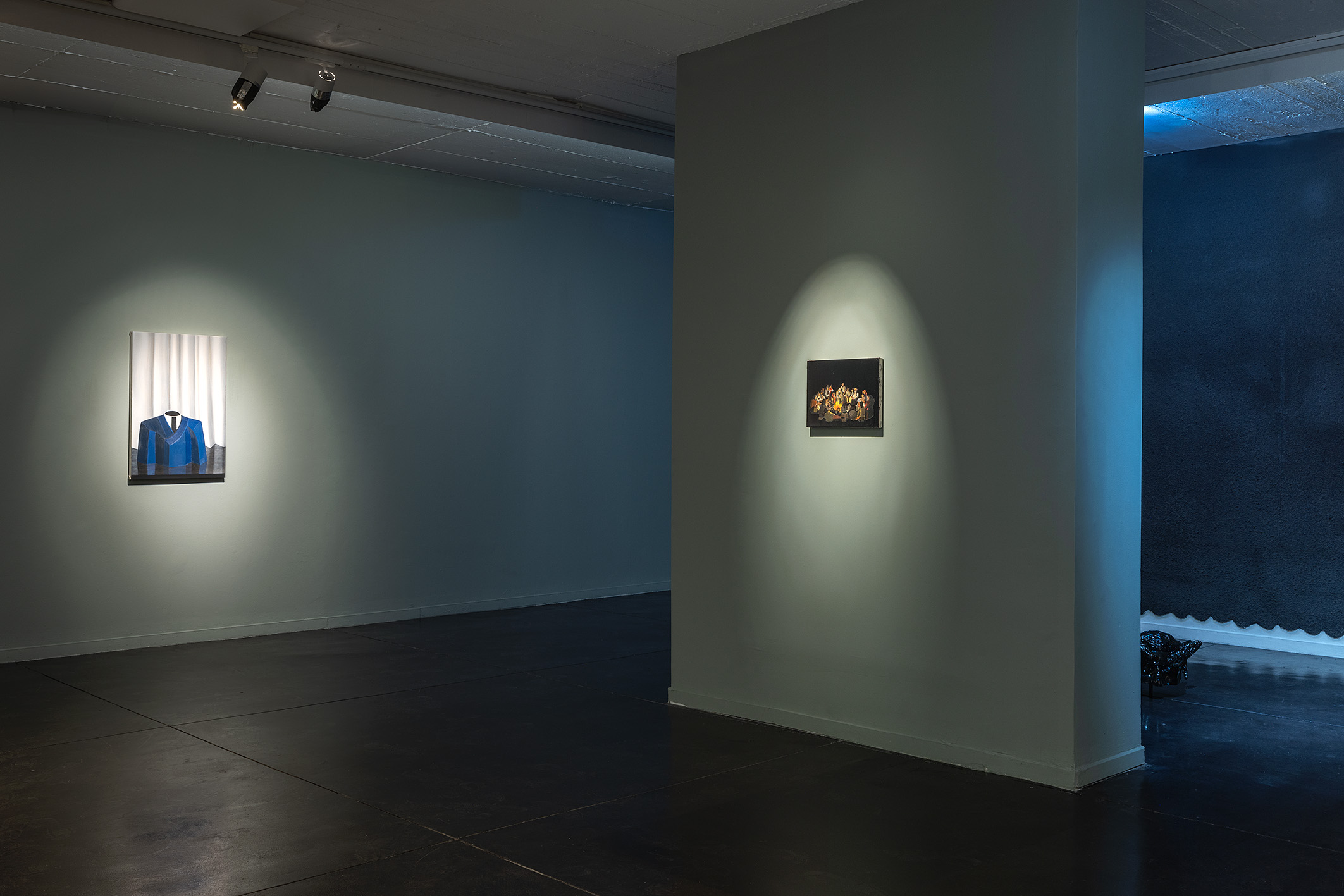
Sagie Azoulay, Installation View at RawArt Gallery, 2026, Installation View at RawArt Gallery, Photo Credit: Elad Sarig
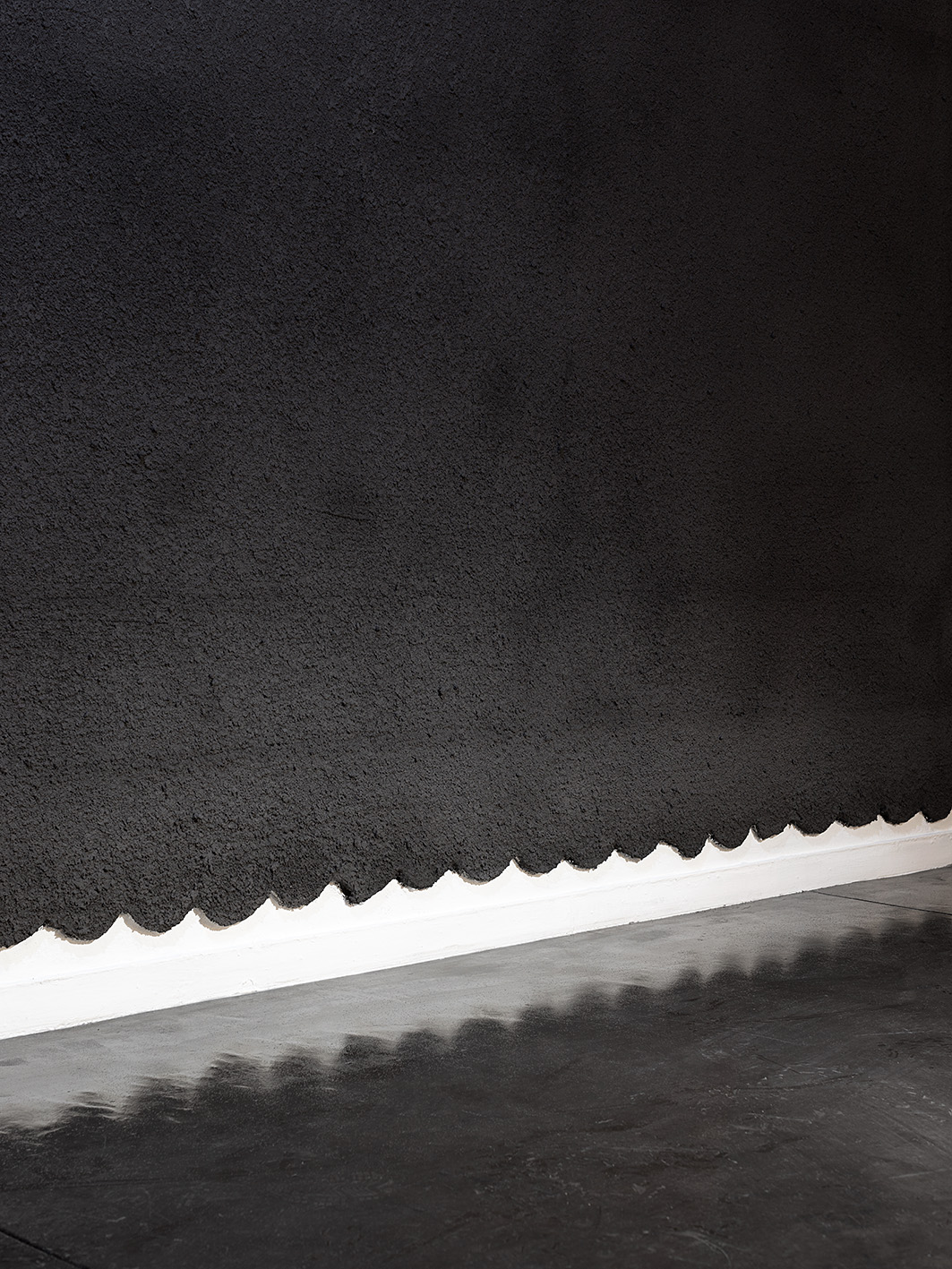
Sagie Azoulay, Backdrop (Black), 2026, 305x880 cm, Photo Credit: Elad Sarig